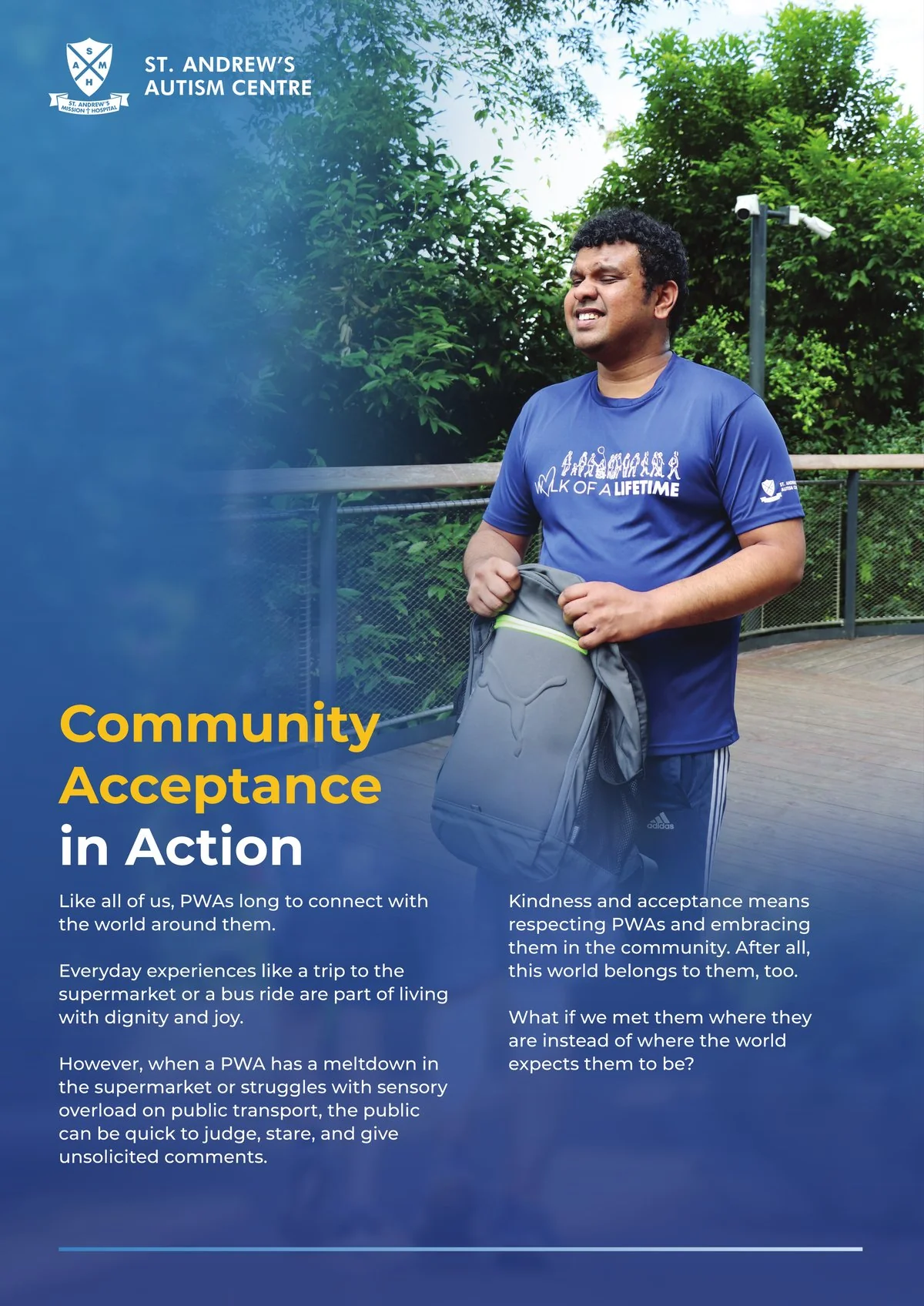
Like all of us, persons with autism long to connect with the world around them. This world belongs to them too — and real inclusion begins with us.
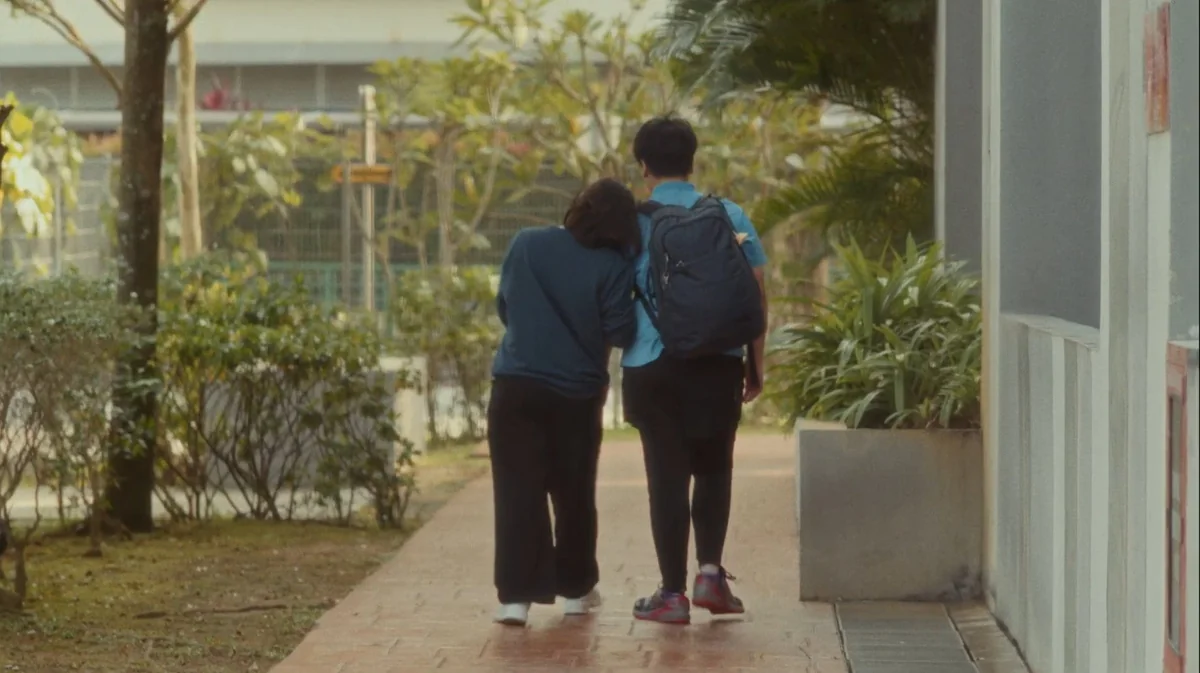
"Kindness and acceptance means respecting us and embracing us in the community. After all, this world belongs to us too."
True inclusion is more than physical access — ramps, quiet rooms, or designated spaces. It is about making room in our hearts and minds for those who experience the world differently.
Everyday experiences like a trip to the supermarket, a bus ride, or a meal at a food court are part of living with dignity and joy. For persons with autism, these are not taken for granted.
What if we met them where they are, instead of where the world expects them to be?
Think of a public space you visit regularly. What would make it more welcoming for a person with autism?
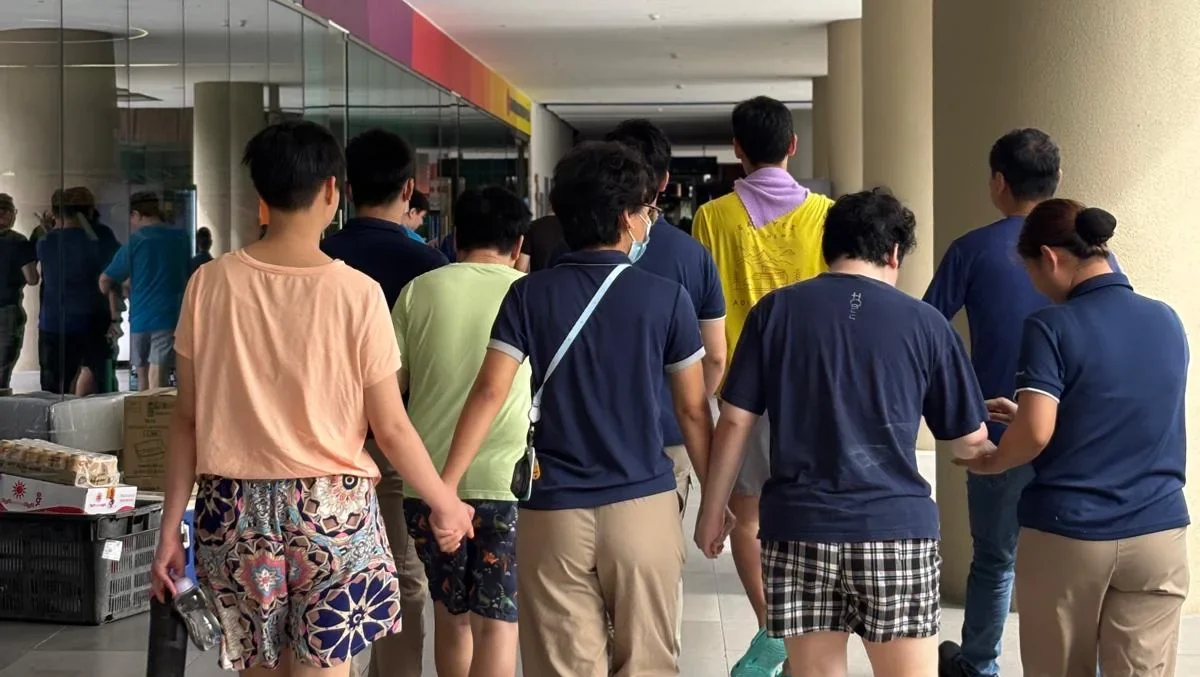
"When I lose control in public, I'm not being difficult. I'm overwhelmed — and I need your patience, not your judgement."
When a person with autism has a meltdown in a supermarket or struggles with sensory overload on public transport, the public can be quick to judge, stare, and give unsolicited comments. This makes an already difficult situation worse — for the individual, and for their caregiver.
A meltdown is not a tantrum. It is a neurological response to being overwhelmed — a complete loss of behavioural control triggered by sensory overload, unexpected change, or emotional distress. The person is not choosing to behave this way.
The most helpful response is calm, space, and no judgement.
If you saw a family struggling in public, what is one small act of kindness you could offer — without making them feel more exposed?
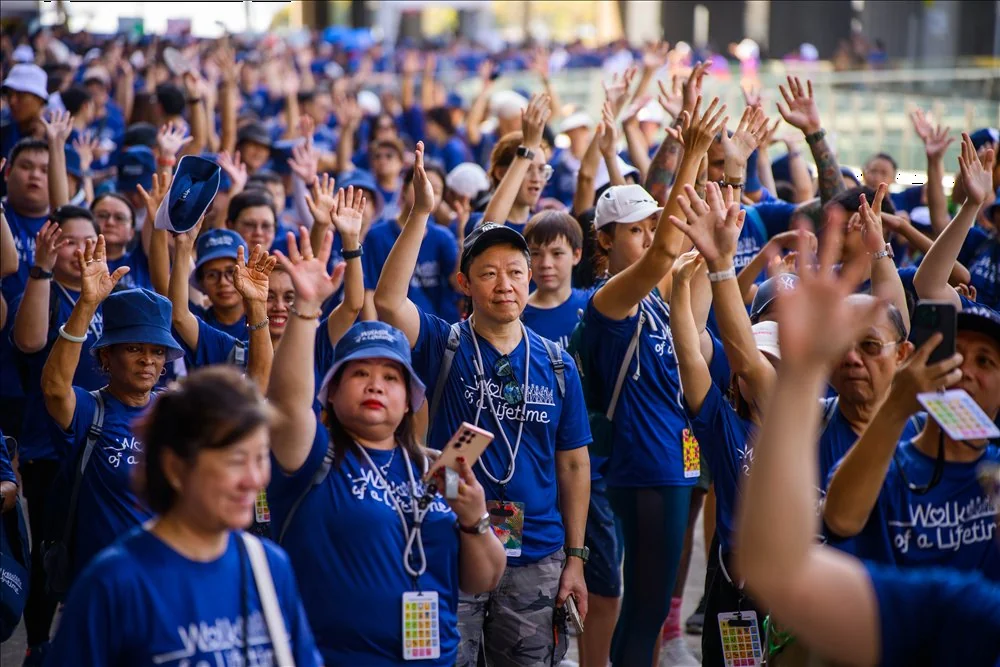
"This is not a journey families should walk alone. It is a shared responsibility."
Caring for a person with autism is a lifelong commitment — and for many families in Singapore, it is carried almost entirely in private. The isolation can be immense.
Community acceptance doesn't require expertise. It requires ordinary people choosing to be a little more patient, a little more curious, and a little more willing to make space.
Schools, workplaces, places of worship, hawker centres, and neighbourhoods all have a role to play. When communities choose inclusion, everyone benefits.
What is one thing your community — your school, workplace, neighbourhood, or place of worship — could do this week to be more inclusive of persons with autism?