Persons with autism often face challenges that are invisible to the eye. Understanding them is the first step to offering genuine support.
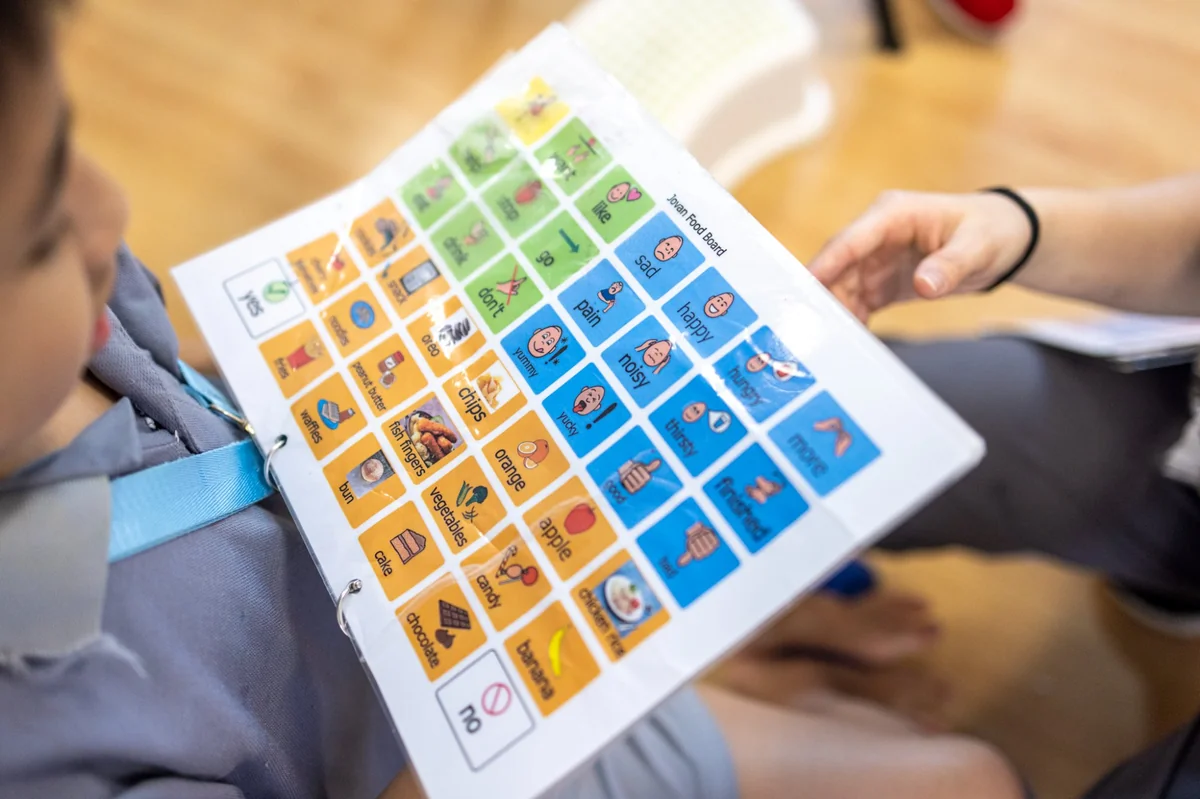
"My gestures, my communication device, the sounds I make — they're all my voice, too."
Not everyone communicates in spoken sentences. Some persons with autism use gestures, devices, or familiar phrases. Others simply need more time to find the right words.
Different doesn't mean less — it is simply a different way of expressing and understanding. And not all persons with autism have the same communication abilities or needs.
The goal is always to find a way to connect, not to insist on one form of communication over another.
If someone couldn't speak to you directly, how would you make space for them to communicate in their own way?

"I love routines, but I can adapt to changes too. Give me some time."
For many persons with autism, routines bring safety and predictability. A sudden change — even a "fun" surprise — can trigger intense anxiety.
Small changes can feel disorienting because they may require rethinking every step of the original plan. For many PWAs with autism, routines provide a sense of safety and control in a world that can feel unpredictable.
This is not stubbornness or inflexibility — it is how their nervous system finds stability.
Think of a routine in your own life that grounds you. How would you feel if it were disrupted without warning?

"The world is full of sensations. My senses may work very differently from yours."
Persons with autism often face sensory challenges. Their senses may be over-sensitive (hyper) — reacting intensely to loud sounds, bright lights, or specific textures. Or under-sensitive (hypo) — hard of hearing, unable to see in low light, or unable to feel what they are touching.
Some may seek deep pressure or repetitive movements (stimming) to self-regulate, while others may shut down from a single unexpected touch.
This varies greatly by person, and can even change day to day.
What environments do you find overwhelming? How might that feeling be magnified for someone with sensory sensitivities — every single day?

"My hums, movements, or rocking aren't 'strange' — they're my calm, my joy. I'm just being me."
Repetitive or unique behaviours — like rocking, humming, or pacing — can help regulate and express emotions or process sensory input. These behaviours are not random, and expressions differ from person to person.
What looks like quirky behaviour to an observer may be a person with autism trying to calm their nervous system, express joy, or focus. Judging or stopping these behaviours without understanding their function can cause distress.
The key is to understand the purpose behind the behaviour — and respond with curiosity rather than correction.
Before judging a behaviour as unusual, ask yourself: what might this person be trying to express or manage right now?