
- Introduction
- Topic 1
- Topic 2
- Topic 3
- Topic 4
- Topic 5
- End

Topic 1: Spectrum
Learning Goal
Understand autism beyond stereotypes and recognise that behaviour often reflects hidden experiences.
1. There is a spectrum
2. There is more than meets the eye
3. What autism is and is not
Opening Reflection
Before we begin, think about the last time you were in a public place. Perhaps at a shopping mall, on the train, or waiting in line at a café.
You might have noticed someone covering their ears, avoiding eye contact, repeating a movement, or becoming upset.
In that moment, it is easy to assume the person is being difficult, rude, or poorly disciplined.
But what if there was more happening beneath the surface?
What if the person was experiencing the world very differently from you?
In this topic, we will take a closer look at autism, not through myths or stereotypes, but through the human experiences behind them.
Most of us form our understanding of autism from one person we have met, or from what we see in the media. But autism looks different in every person.
Jasper
Jasper is an outgoing boy who enjoys chatting with anyone he meets. His favourite topic is anime and he can talk about it for a long time. Jasper goes to school like other students, but making friends is not always easy for him. Sometimes he speaks very honestly about what is on his mind and does not realise it may upset others. Loud and busy environments can also feel overwhelming for him, which makes school especially challenging at times. This often gets him into trouble with teachers and classmates, leaving him feeling misunderstood.
Jasper has autism.
Rachel
Rachel is a quiet girl who loves to draw. She often spends time on her own, happily singing songs she enjoys. When she goes out she wears noise-cancelling headphones because loud sounds can feel overwhelming. Rachel also prefers things to stay the same. Familiar routines and predictable plans help her feel calm and safe. She becomes uncomfortable when it gets too hot. Rachel speaks mainly with her parents using short and simple phrases.
Rachel has autism.
Daniel
Daniel is an active boy who loves to move. Swimming, running and jumping on the trampoline are some of his favourite activities. Sometimes Daniel also repeats certain movements, such as jumping or flapping his hands, especially when he is excited or trying to calm himself. Daniel does not use spoken words to communicate. Instead he uses gestures to show his parents what he wants. He has a great appetite and enjoys mealtimes. For other daily routines such as showering, brushing his teeth and getting dressed, Daniel still needs support.
Daniel has autism.
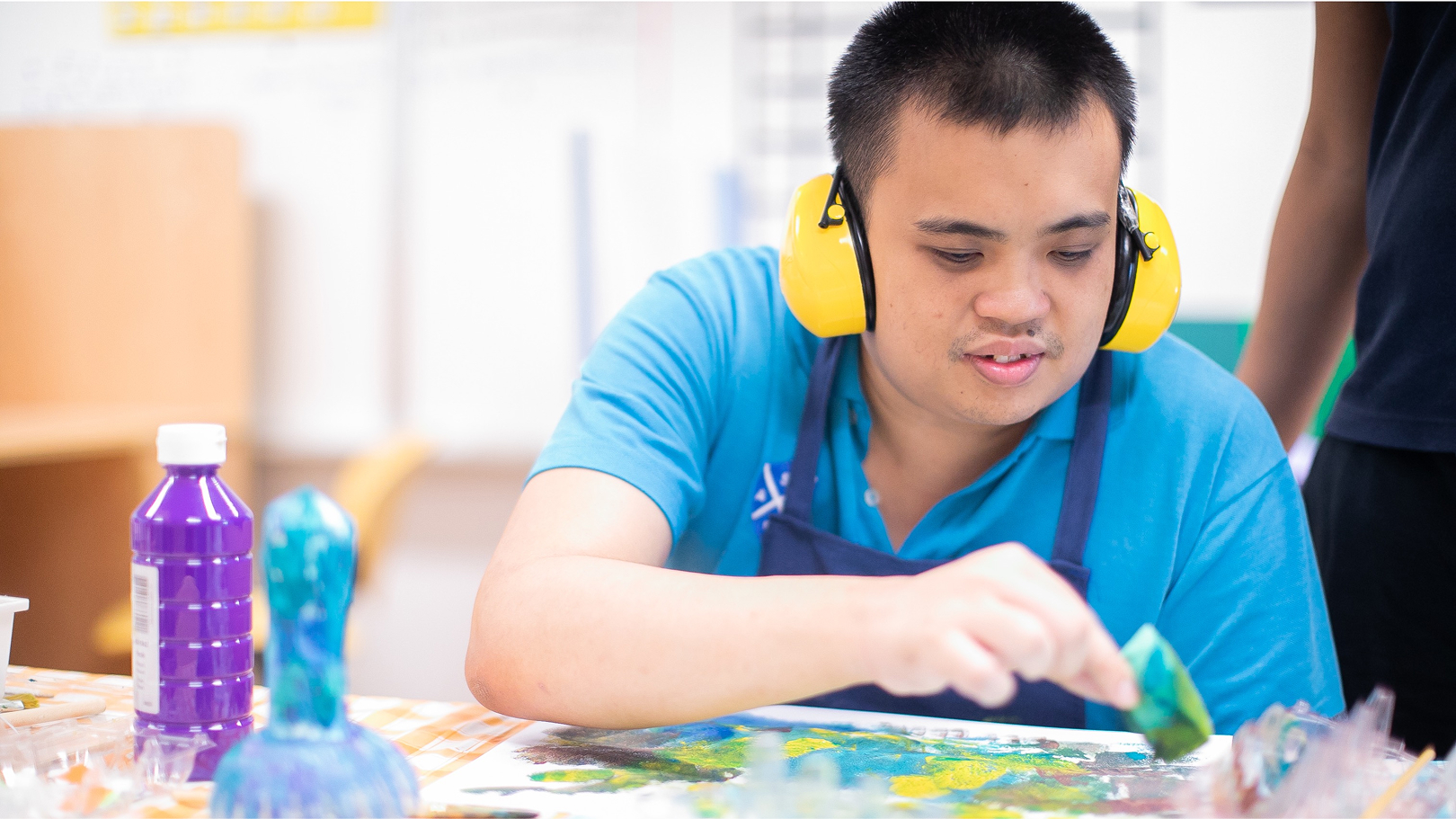
Autism is a spectrum. This means every person experiences autism differently. The spectrum isn’t a straight line from “mild” to “severe,” but a diverse range of support needs in communication, social skills, and sensory processing.

― Stephen Shore
The Definition:
Autism is a lifelong neurodevelopmental condition.

It is not something to be “fixed”.
It reflects a different way the brain processes and experiences the world.
The Reality:

2. Myth Busters
Many of us have heard things about autism that aren’t quite right. Let’s bust those myths and learn the human truths behind them.
Autism is a result of bad parenting or poor discipline.
Truth:
Autism is a neuro-developmental condition where part of the brain is developing differently from other neurotypicals.
Autism can be cured, or children will grow out of it.
Truth:
Autism is lifelong.
While support needs can change over time, the person remains on the spectrum throughout their life.
If you know one person with autism, you know what autism is like.
Truth:
“If you’ve met one person with autism, you’ve met one person with autism”
It is a wide spectrum ranging from low to high support needs, and no two individuals experience it the same way.
Autism is contagious or an illness.
Truth:
Autism is not contagious.
It is a neurological difference. Because it has to do with how the brain develops, it is not contagious.