
- Introduction
- Topic 1
- Topic 2
- Topic 3
- Topic 4
- Topic 5
- End
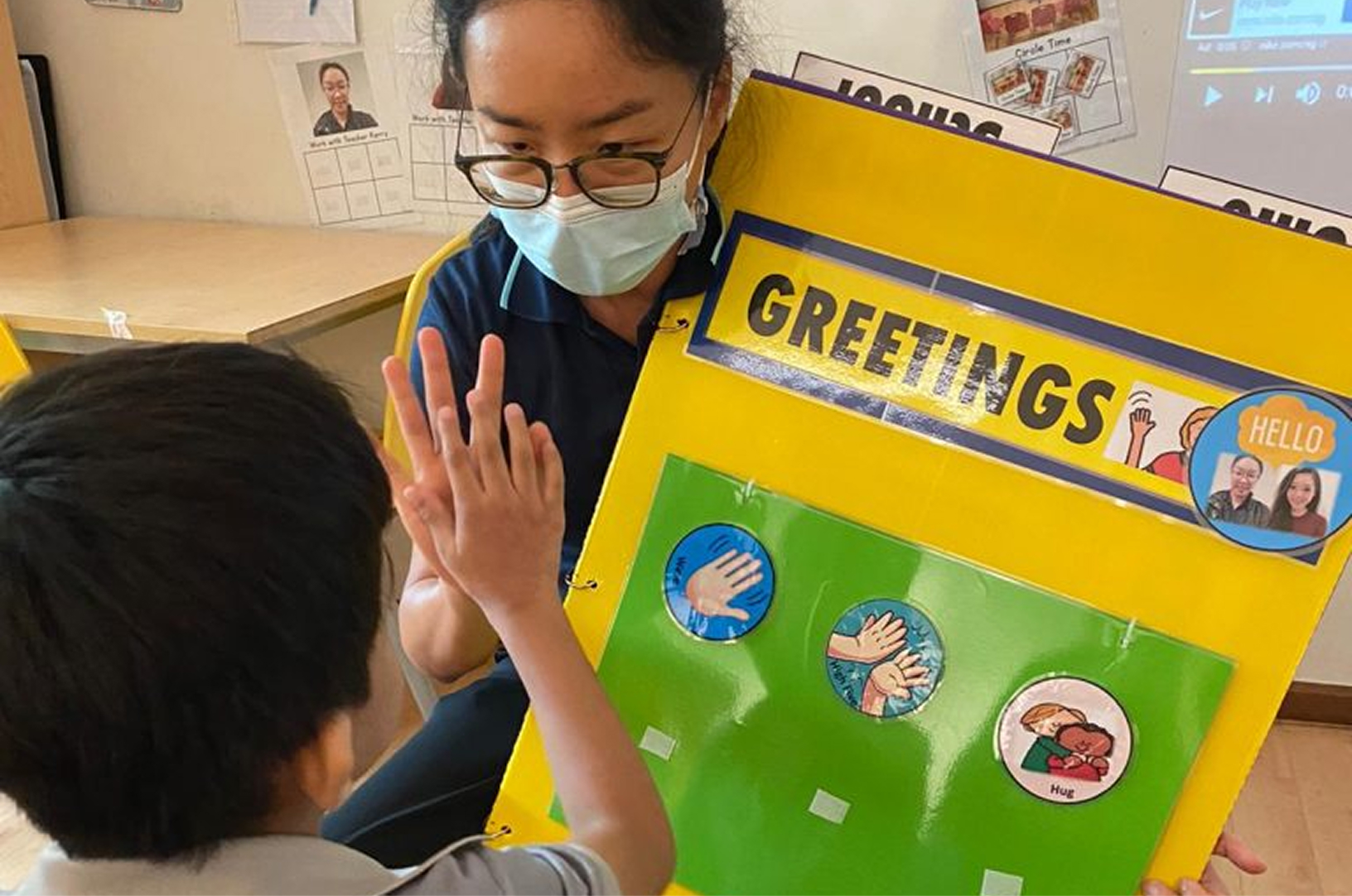
Topic 2: Communication
Learning Goal
Recognise that communication takes many forms and that connection is not limited to speech.
Key Learning Points
- Communication is about connection, not just speech.
- Communication across the autism spectrum looks different for each person.
- Visuals often communicate more clearly than words.
Think about the last time someone misunderstood you. Perhaps you chose the wrong words, paused too long, or someone assumed something about you before you finished speaking.
It can feel frustrating when what is in your heart does not come across clearly. For many people with autism, communication can feel like this every day.
1. Connecting from the heart
Communication is not only about spoken words.
It is about connection.
People connect in many different ways.
Different does not mean less.
2. Visuals Help Us Communicate
Our brains understand pictures faster than words. For many people with autism, visuals make information clearer and easier to process.
Autism advocate Temple Grandin once described her experience this way:
― Temple Grandin
For many individuals on the spectrum, pictures and visual cues are easier to understand than long verbal instructions. Even for those who can read complex paragraphs, in times of anxiety or overstimulation, visuals can ease how they process excess information and communicate back in return.
Real-Life Example: A Communication Board
Take a look at this communication board.
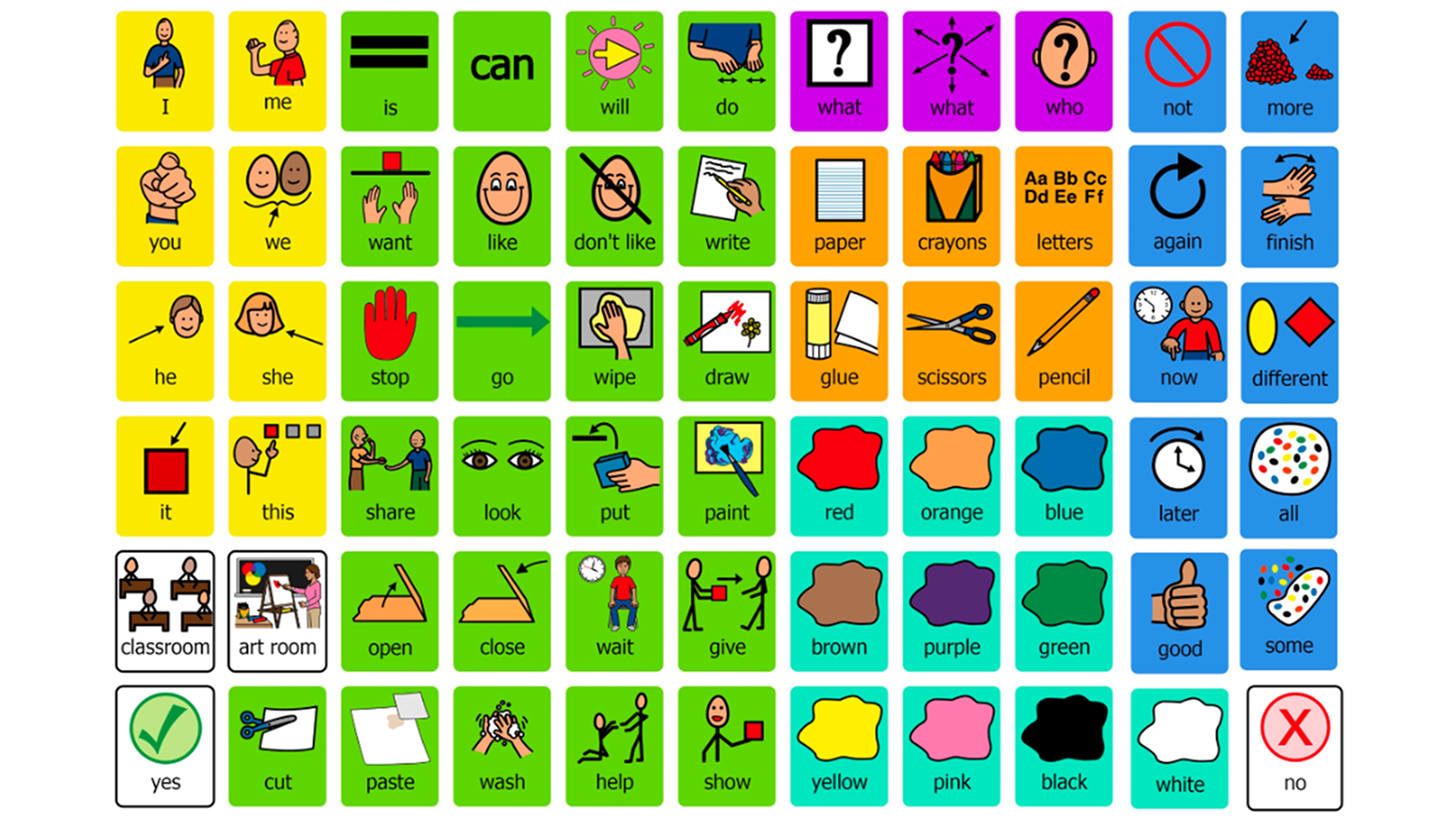
Some persons with autism use an Augmentative and Alternative Communication (AAC) device like this communication board. A communication board uses pictures or symbols to help a person express their needs, choices, and feelings.
Someone might point to a picture to say:
- “I want a drink.”
- “I need the toilet.”
- “I feel upset.”
- “I want to go outside.”
A communication board is not a replacement for communication. It is communication. It gives a person a voice, a way to be heard when spoken words are difficult to come by.
Imagine This
Imagine arriving in a country where you cannot read the language. You look for familiar symbols.

Restroom

Exit

Food
These signs help you feel safe and confident. In the same way, when spoken language is difficult to understand, we naturally rely on visual cues to guide us.
For some people with autism, navigating a world full of spoken instructions can feel like being in a foreign country every day. Visuals help make communication clearer and easier for everyone.
3. The Spectrum of Voices
Explore the different ways people may communicate.
Communication on the autism spectrum looks different from person to person.
Fluent but Challenging
Some autistic people speak fluently, but conversations can still be confusing. Understanding sarcasm, hints, or when to change topics may be difficult.
The Explicit Conversationalist
Some people can talk and answer questions, but complex questions require more time to process.
Clear and simple questions help.
The Practical Speaker
Some people communicate using short phrases connected to everyday needs.
Examples:
“Want water.”
“Go outside.”
“Finished.”
Simple communication is still meaningful communication.
The Echo
Some people repeat words or phrases they have heard before.
This is called echolalia.
Repeating words can help someone process language or join the interaction.
The Non-Speaking Communicator
Some autistic people do not use spoken words. They may communicate through:
- gestures
- pictures
- communication devices
- typing
Their voice are just as loud but simply looks different
Listening with Your Eyes
Communication is not only what we hear. It is also what we notice.
Closing Learning Point
Communication on the autism spectrum can look many different ways.
Some people speak fluently.
Some speak a little.
Some echo.
Some do not use spoken words at all.
But every person communicates in some way.
When we slow down, stay patient, and remain open to different ways of connecting, we begin to meet the person behind the words.
Multiple Choice Quiz
Learners answers Q&A based on real examples to reinforce understanding.
Results
Question 1 of 1
What Would You Do?
You are ordering food at a café. A young man is standing in front of you in line. When it is his turn to order, he does not look at the cashier. Instead, he looks down and repeats softly:
“Chicken burger… chicken burger…”
The cashier asks, “What do you want?” but he does not respond right away. There is a short pause. You remember that some people communicate differently.
What might be the most helpful response?
#1. Question 1
Correct Answer: B