
The suitcase was new, and not even filled with much. So were the shirts hanging beside it – his first interview clothes ever – pressed and ready. For PF, then a resident at St. Andrew’s Adult Home, these simple things symbolised something much larger: the careful, deliberate work of preparing for a new chapter in life.
When a person with autism moves from one home to another, the move itself is most likely the culmination of months of preparation, planned around one individual, his routines, and the pace at which he is ready to change.
For many persons with autism, routine is not a preference but a form of safety. Differences in sensory processing and anticipation means that an unfamiliar environment can feel unsafe, so what we may perceive as a small change may need weeks or months of gradual, repeated exposure before it feels survivable for persons with autism.
PF recently made such a move, from St. Andrew’s Adult Home to SAAC’s Enabled Living Programme (ELP), which supports adults with disabilities with low to moderate support needs to live independently for as long as possible. The ELP is part of SAAC’s commitment to walking with persons with autism across the whole spectrum, through every stage of life.
Reaching inchstones, one at a time
The preparation began months before moving day.
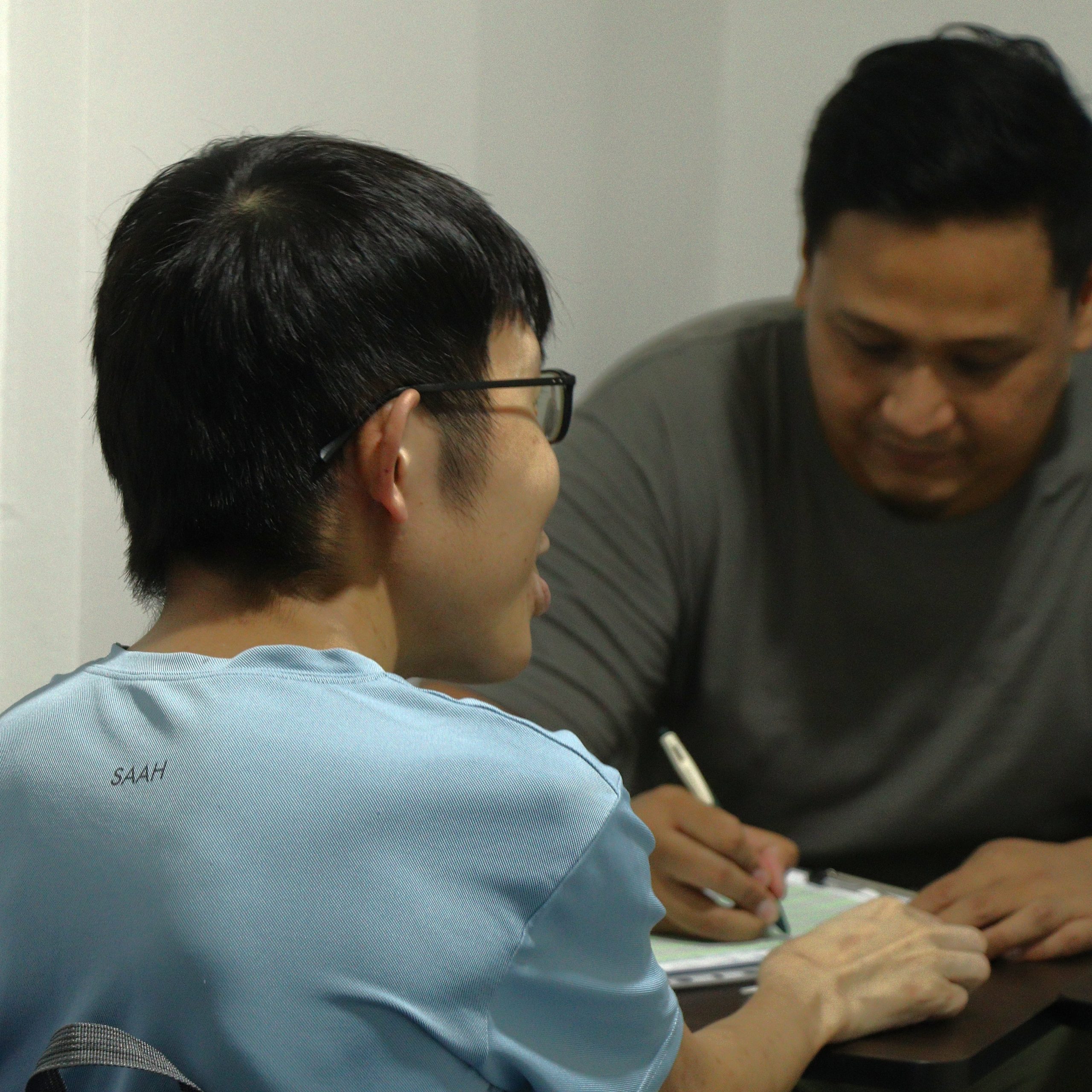
Some of the preparations looked like teaching. New daily living routines were taught by his Training Officer and practised step by step: doing the groceries, preparing simple meals, managing his own laundry, travelling a new route… Skills were built, repeated, and made familiar for PF.
It will take time for PF to perfect these.
Some of the preparations looked like an introduction. PF made planned visits to his new home, before it was his home. A trial stay and familiarisation visits gave him the chance to get used to the space and interact with the staff who would support him, and the neighbourhood that would become his home.
All this, so that on moving day, nothing would surprise him.
Most of it looked like everyday life, which is exactly the opportunity that we want to provide to our residents. The clothes to be worn to his first interview. The new luggage he got as a gift from his SAAH caregivers. The team even set up a bank account, phone line and even an email address – all firsts for PF. Person-centeredness is and always our focus, and we worked to ensure that PF was at the center of all the team’s decisions.
With the guidance of the SAAC team, PF went through multiple familiarisation trips, along with exposure to multiple activities for daily living, to ensure that he has as smooth a transition as possible to the ELP.
“Throughout the onboarding process, PF was at the center of our decisions; not the constraints, and not our convenience”, said Hezekiah Lim, the ELP Programme Manager.
His family was part of the preparation too. From thinking that his son would be in a residential home for life, to finding out that he has a shot at independent living. The apprehension at the beginning was palpable for Mr. Wong, PF’s father.
“[PF] likes to talk slowly. He likes Woodlands, but I worry that he doesn’t know the place well and needs guidance. This is also the first time he will work outside, and I worry that people do not understand his behaviour… I told him, I am old now. You have to take care”, said Mr. Wong.
SAAC’s vision is for persons with autism to lead dignified and meaningful lives, and as we step into our ELP journey, we hope that members of the public will continue to support us in our work.
“Our vision for the ELP is for our clients to be able to live ordinary lives, in ordinary homes, in ordinary neighbourhoods. We want to afford PF, an individual with the potential and ability to live in the community, the opportunity to do exactly that. Every person, disability or not, deserves the opportunity to lead an ordinary life, one with dignity and meaning. We may not be able to help everyone, or support everyone, but it will not be for lack of trying”, said Hezekiah.
Looking ahead
That is the part most people never see. Giving someone a chance at greater independence is not a single decision, and being person-centred lies in dozens of small, patient decisions, made over months, by caregivers, programme staff, and family. We strive towards this ideal, so that persons with autism would be able to lead dignified and meaningful lives.
On moving day, the new suitcase was finally used. Before he turns in for the first night, he takes a cathartic lap around the house – his house – looking around the kitchen, the living room, the couch he was just sitting on.
The noise and bustle of SAAH is now just a memory. As he sits on his bed, the quiet of his new home gives him a sense of peace, and perhaps, the hope of being able to now live an ordinary life, in an ordinary home, in an ordinary neighbourhood.
“There is dignity in being able to live independently.“
If you are interested in signing up for The LIGHT House @ Woodlands, or know anyone with autism or intellectual disability who might be interested or in need of this service, do email enquiries_elp@saac.org.sg or call 6970 4319 and we will be happy to share more about the ELP with you, or guide you with the registration process.
Keep an eye out for our next story, where we’ll take a look at what came after the move: work, and the partners who make employment possible for adults with disabilities.
If you’d like to support persons with autism and their education, you can do so by:
Volunteering with SAAC
You can give the gift of your talents and time by volunteering. We welcome those with a heart to serve.
Donating to our programmes
Help us provide persons with autism with highly structured programmes and give respite to their caregivers.
Advocating for Autism
Those on the autism spectrum are often misunderstood and excluded from the public eye. Mention us to friends & family.