
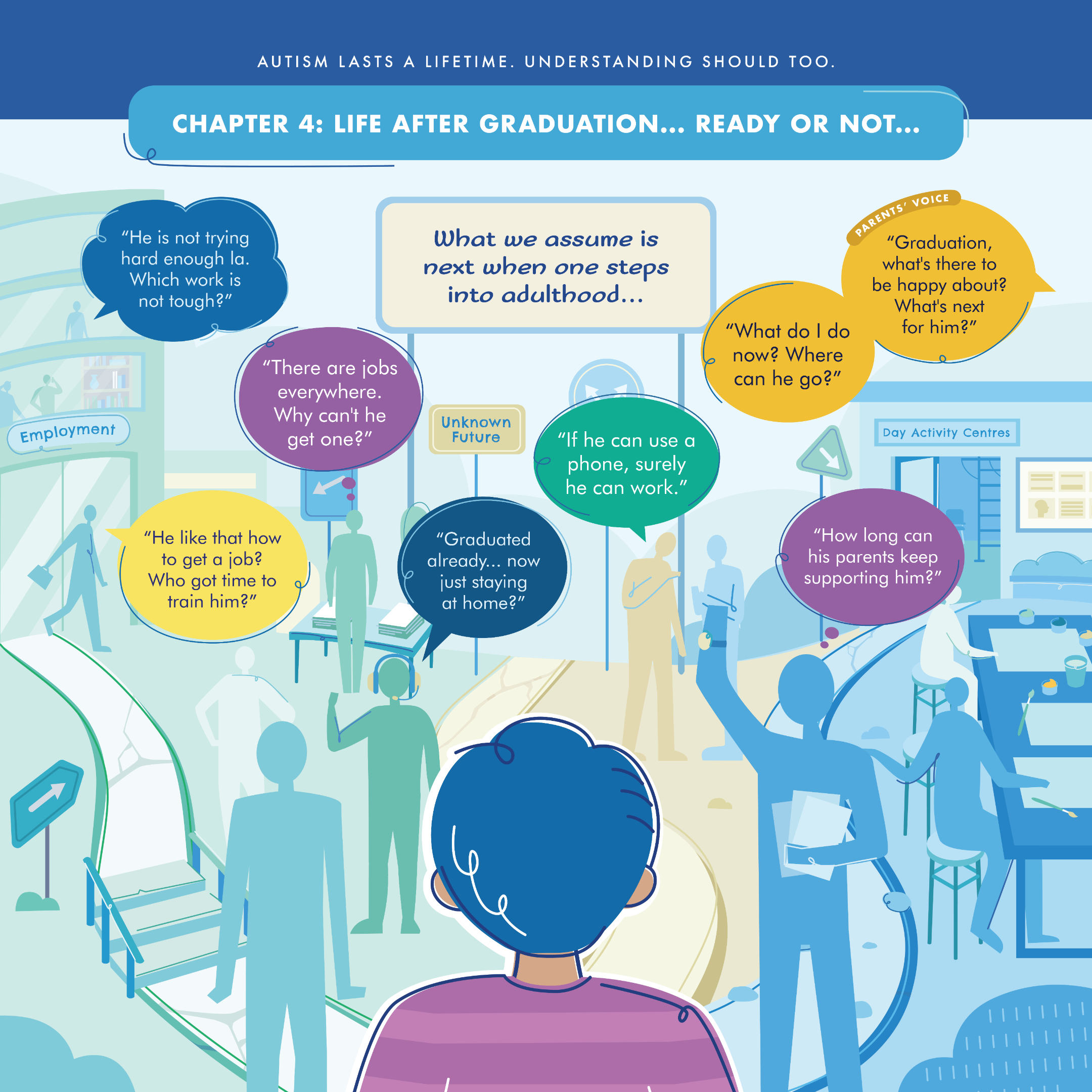
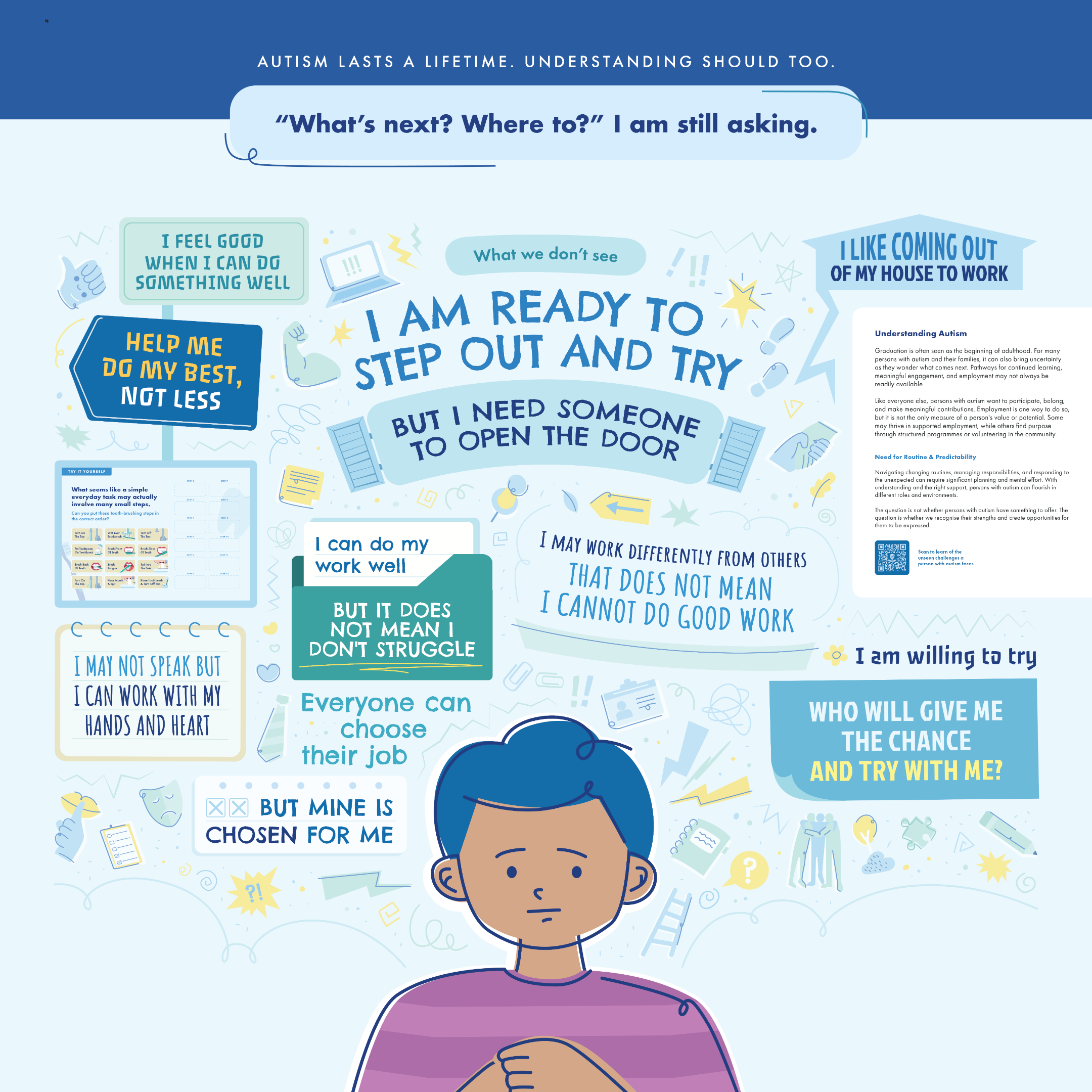
Graduation is often seen as the beginning of adulthood. For many persons with autism and their families, it can also bring uncertainty as they wonder what comes next. Pathways for continued learning, meaningful engagement, and employment may not always be readily available.
Like everyone else, persons with autism want to participate, belong, and make meaningful contributions. Employment is one way to do so, but it is not the only measure of a person’s value or potential. Some may thrive in supported employment, while others find purpose through structured programmes or volunteering in the community.
Navigating changing routines, managing unsaid expectations, and responding to the unexpected can require significant planning and mental effort. With understanding and the right support, persons with autism can thrive in different roles and environments.
The question is not whether persons with autism have something to offer, the question is whether we recognize their strengths and create a space in life for them to be expressed.
According to this chapter, employment is:
If a person with autism is not working, he/she is not successful in life.
What are some pathways persons with autism may take after turning 18?