
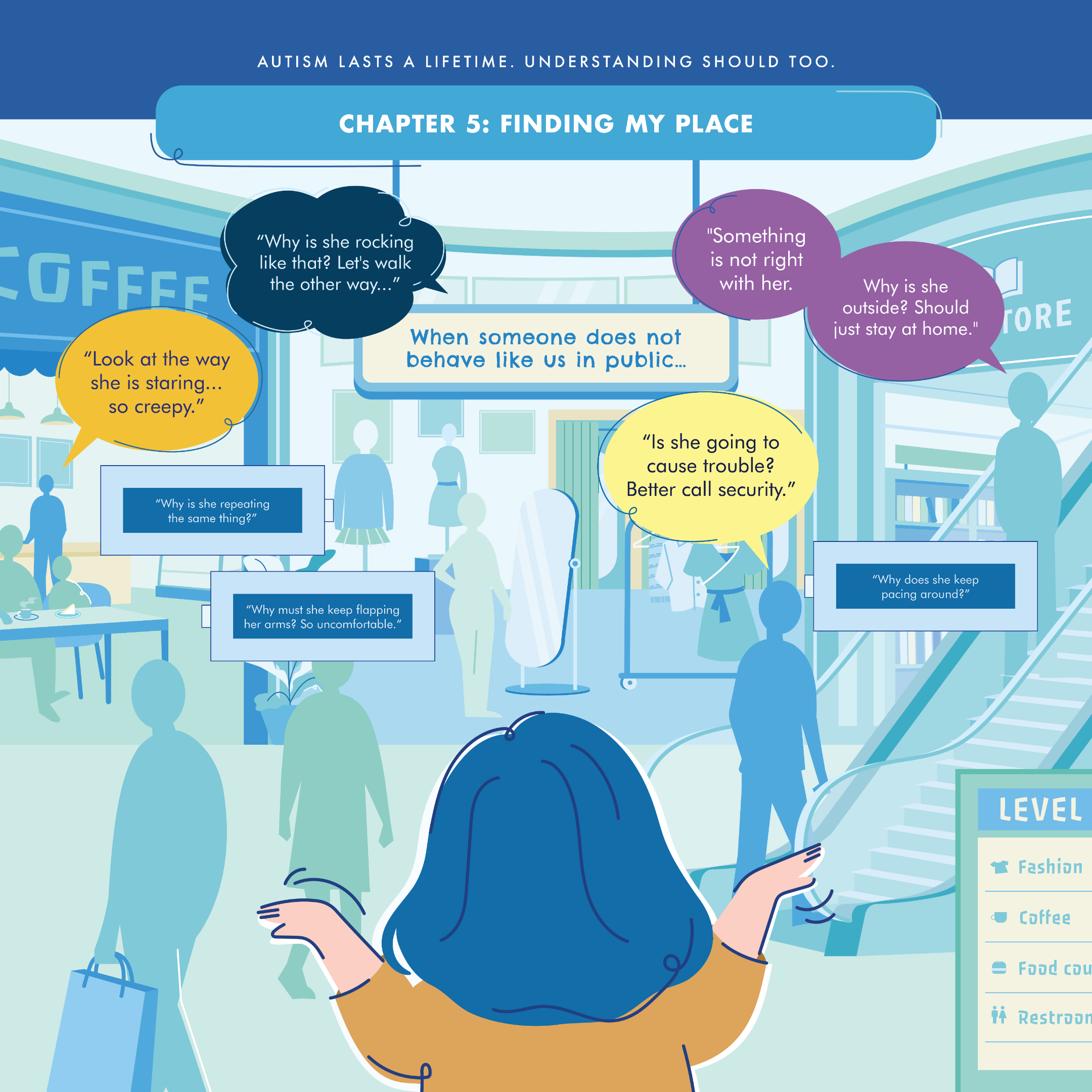
Society often expects adults to understand social norms and move through public spaces without drawing attention. Behaviours that help persons with autism cope, regulate, or communicate may be misunderstood by others as disruptive, strange, or even threatening.
Persons with autism also want to enjoy everyday experiences, spend time in places they like, and be part of their communities. Sometimes understanding the reason for a behaviour is what it takes to replace fear with acceptance and make a space feel welcoming.
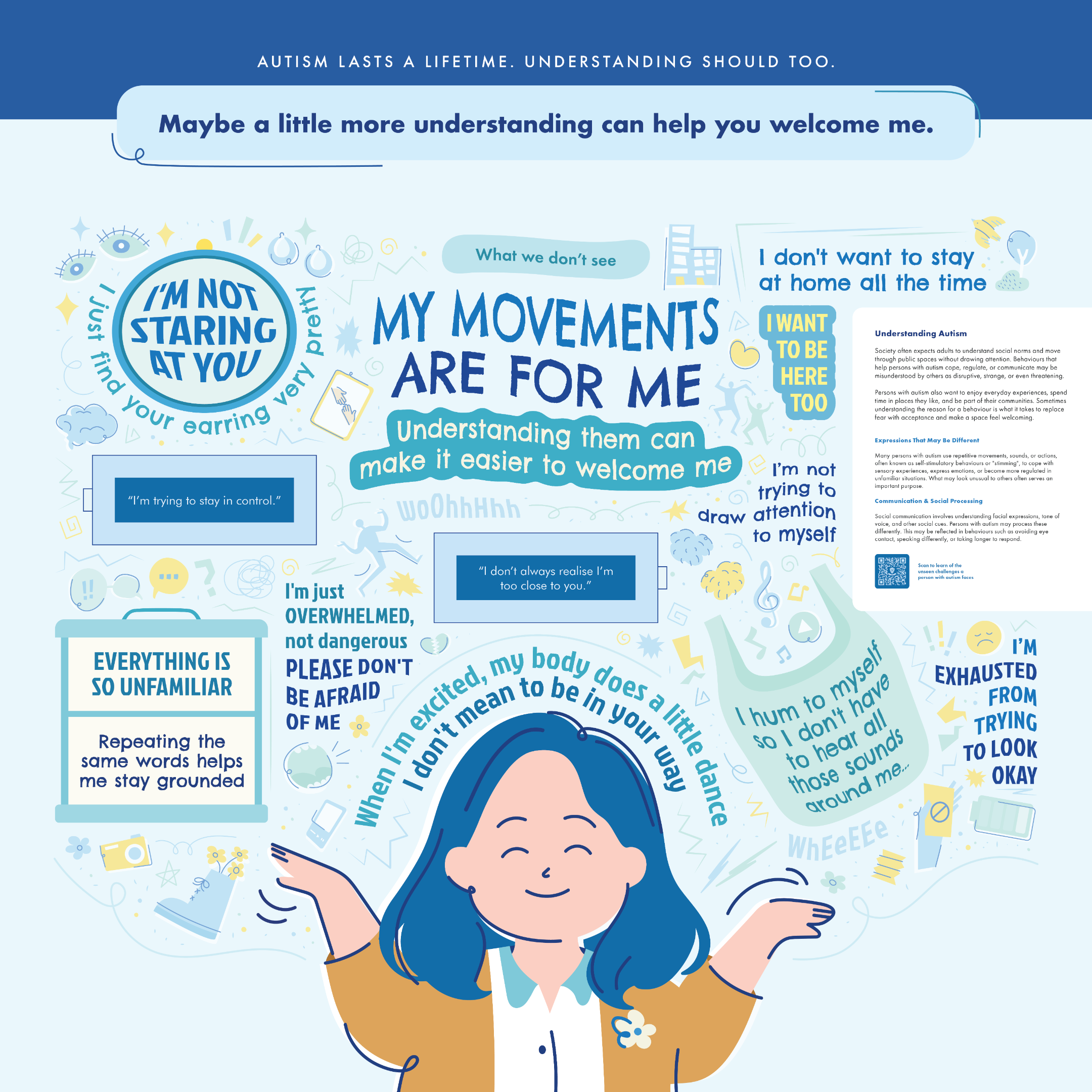
Many persons with autism use repetitive movements, sounds, or actions often known as self-stimulatory behaviours or “stimming”, to cope with sensory experiences, express emotions, or because of non-regulated / unfamiliar situations. What may look unusual to others often serves an important purpose.
Social communication involves understanding facial expressions, tone of voice, and other social cues. Persons with autism may process these differently; this may be reflected in behaviours such as avoiding eye contact, speaking differently, or taking longer to respond.
Self-stimulatory behaviour, or “stimming”, serves an important purpose even if it looks unusual to others.
Differences in social processing may be reflected in behaviours such as: